> For the complete documentation index, see [llms.txt](https://docs.appstoremanager.net/llms.txt). Markdown versions of documentation pages are available by appending `.md` to page URLs; this page is available as [Markdown](https://docs.appstoremanager.net/documents/phrase-and-lokalise/import-app-store-metadata-to-phrase.md).

# Import App Store Metadata to Phrase

Follow these steps to import information from an existing Google Play or App Store Connect listing into [Phrase](https://phrase.com/):

* In the App Store Manager, create the app
* Make a fresh package
* Start the import from store mechanism
* Apply the App Store Manager the imported metadata
* Export the metadata to an Excel file
* In Phrase, start a new project
* File import into Phrase

### App Store Manager setup

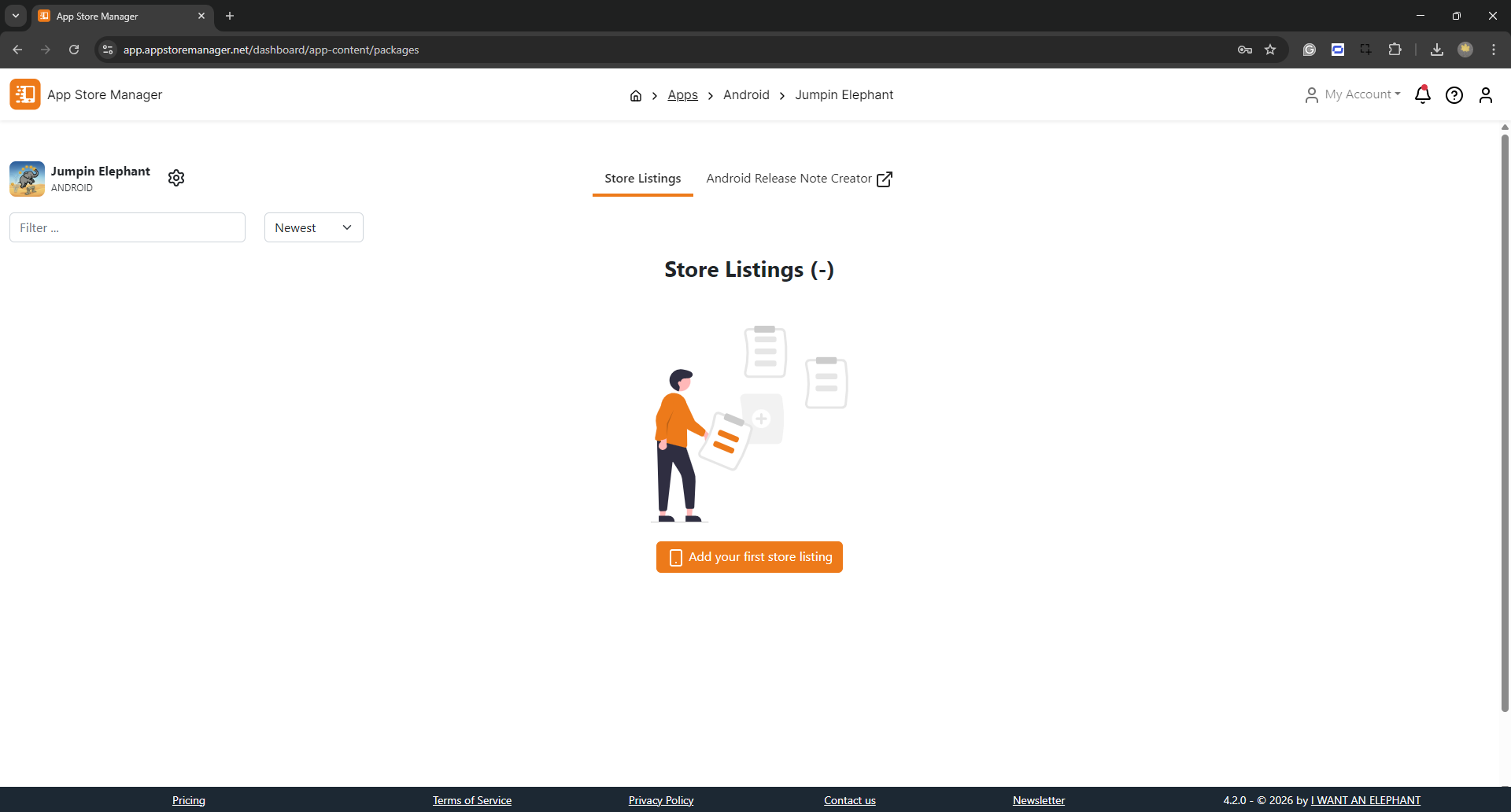
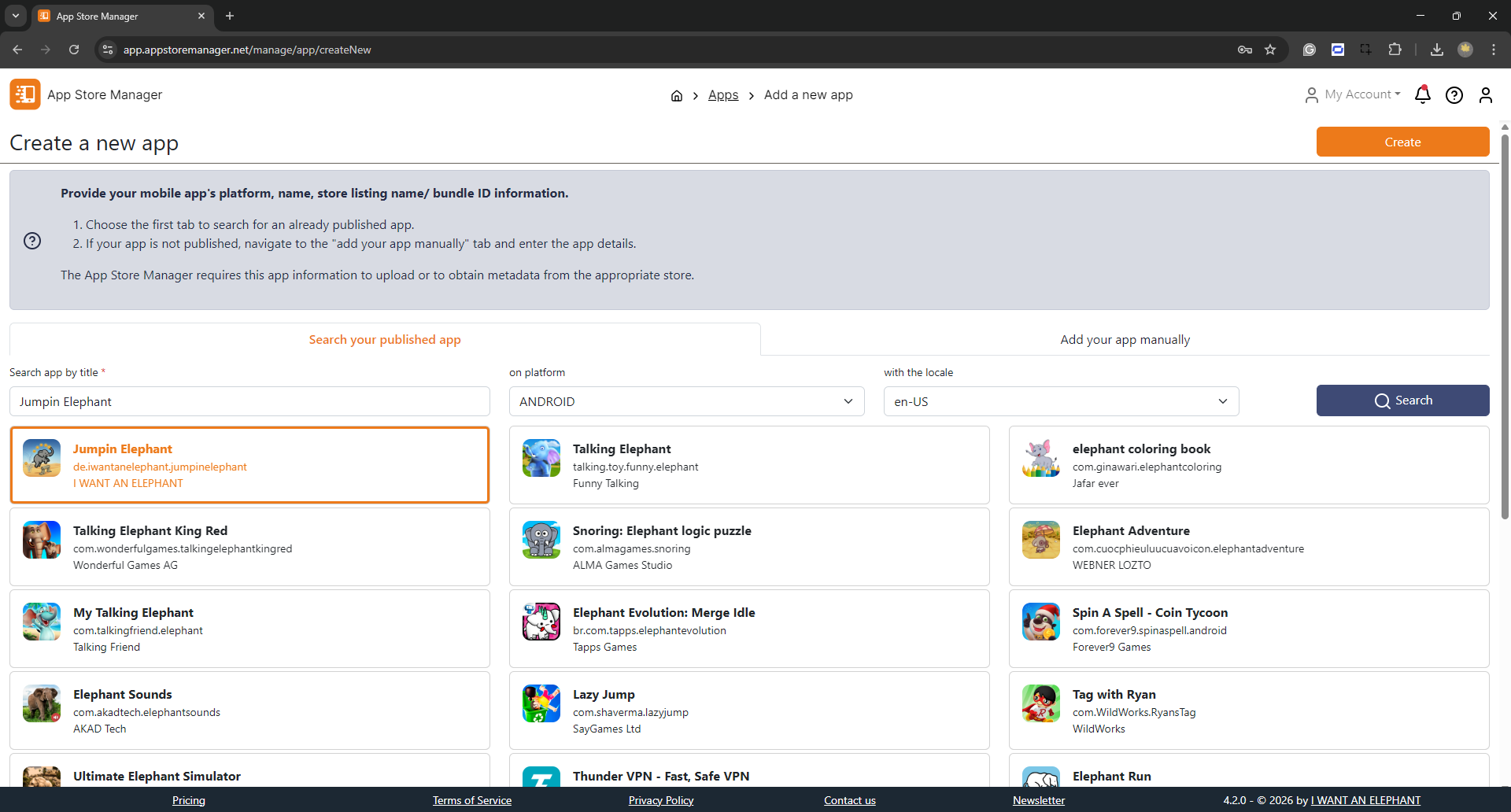
You can manually enter the app's details or create a new app in the App Store Manager by searching for it (if it has already been published).

<figure><img src="/files/zd8jgvRYM2yF5l6iuqnT" alt=""><figcaption><p>Create a new app</p></figcaption></figure>

Create a new package in the newly formed app.

<figure><img src="/files/CyFlY1mjpTAKA6HmuICk" alt=""><figcaption><p>Create a new app package</p></figcaption></figure>

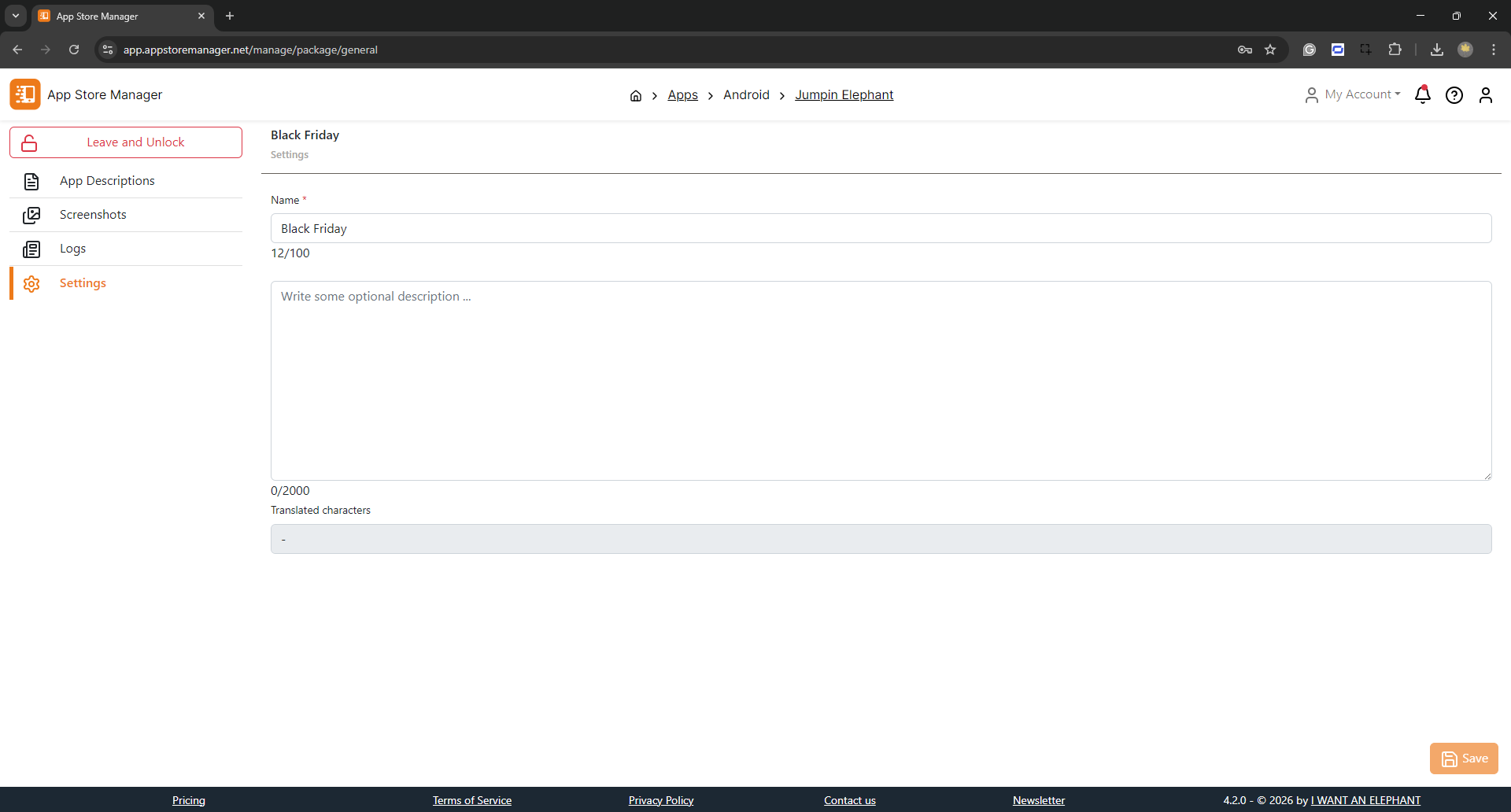
Give the app a proper name before editing the description.

<figure><img src="/files/LCxyEXe3FVKODlFleiLS" alt=""><figcaption><p>Name the package</p></figcaption></figure>

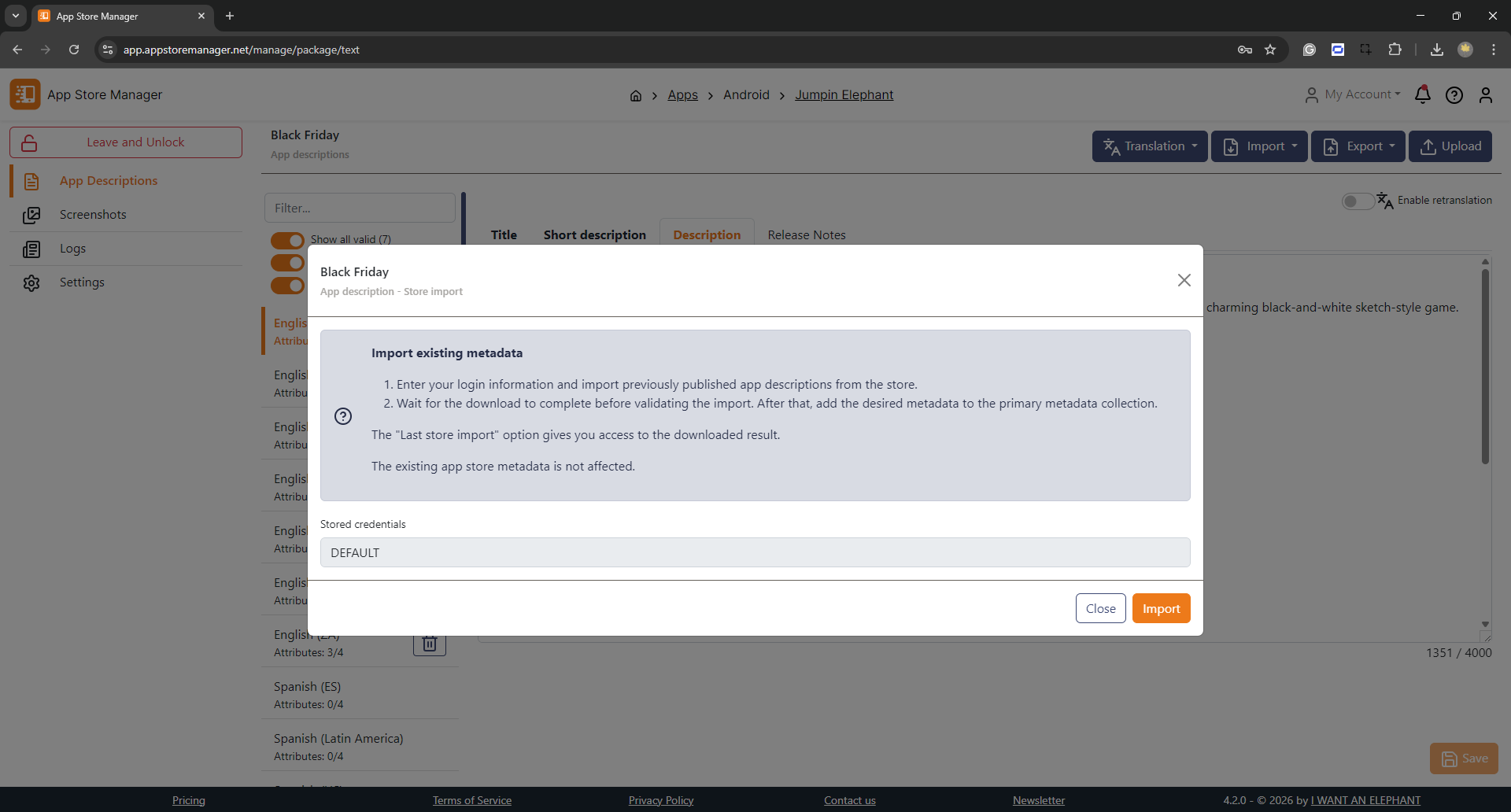
In the top right corner, click the "Import/Import from Playstore" (Android) or "Import/Import from App Store" (Apple) option.

Add the necessary permissions.

You can find tutorials on the access and permission requirements here: [Google Play Console](/documents/access/google-play-console-access.md) and [App Store Connect](/documents/access/app-store-connect-access.md).

<figure><img src="/files/2ycbCkFLEFrUHskQuhJI" alt=""><figcaption><p>Import from store function</p></figcaption></figure>

Start importing the metadata from the store and wait for it to finish.

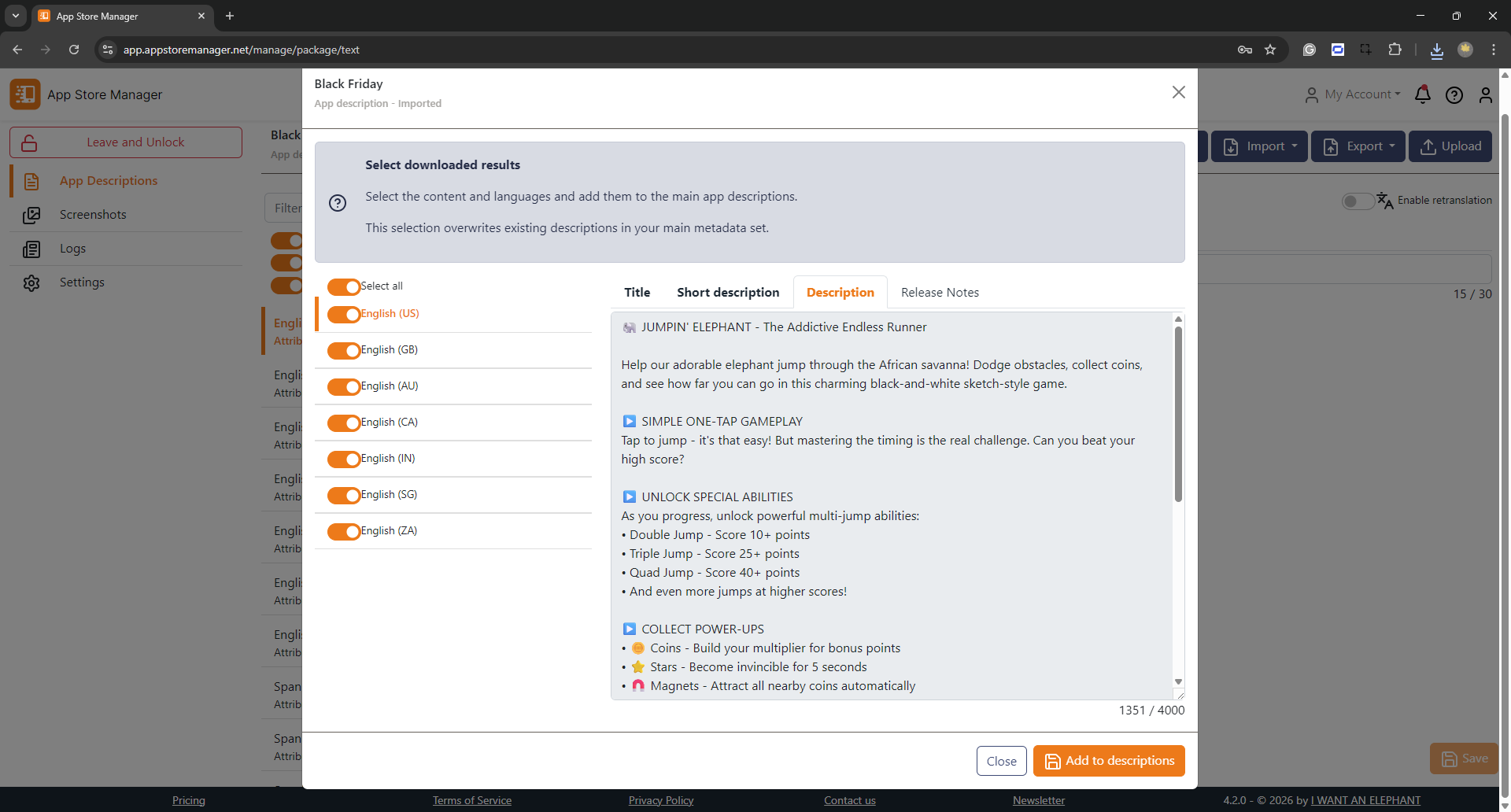
Once the process is completed, click "OK" and add all metadata to your package in the following dialog.

<figure><img src="/files/zpSveopjjaS382kh8WiK" alt=""><figcaption><p>Select imported metadata</p></figcaption></figure>

This allowed us to import all of the app's existing metadata into the App Store Manager.

The metadata may now be readily exported, edited in Phrase, and then imported again.

### Export metadata to file

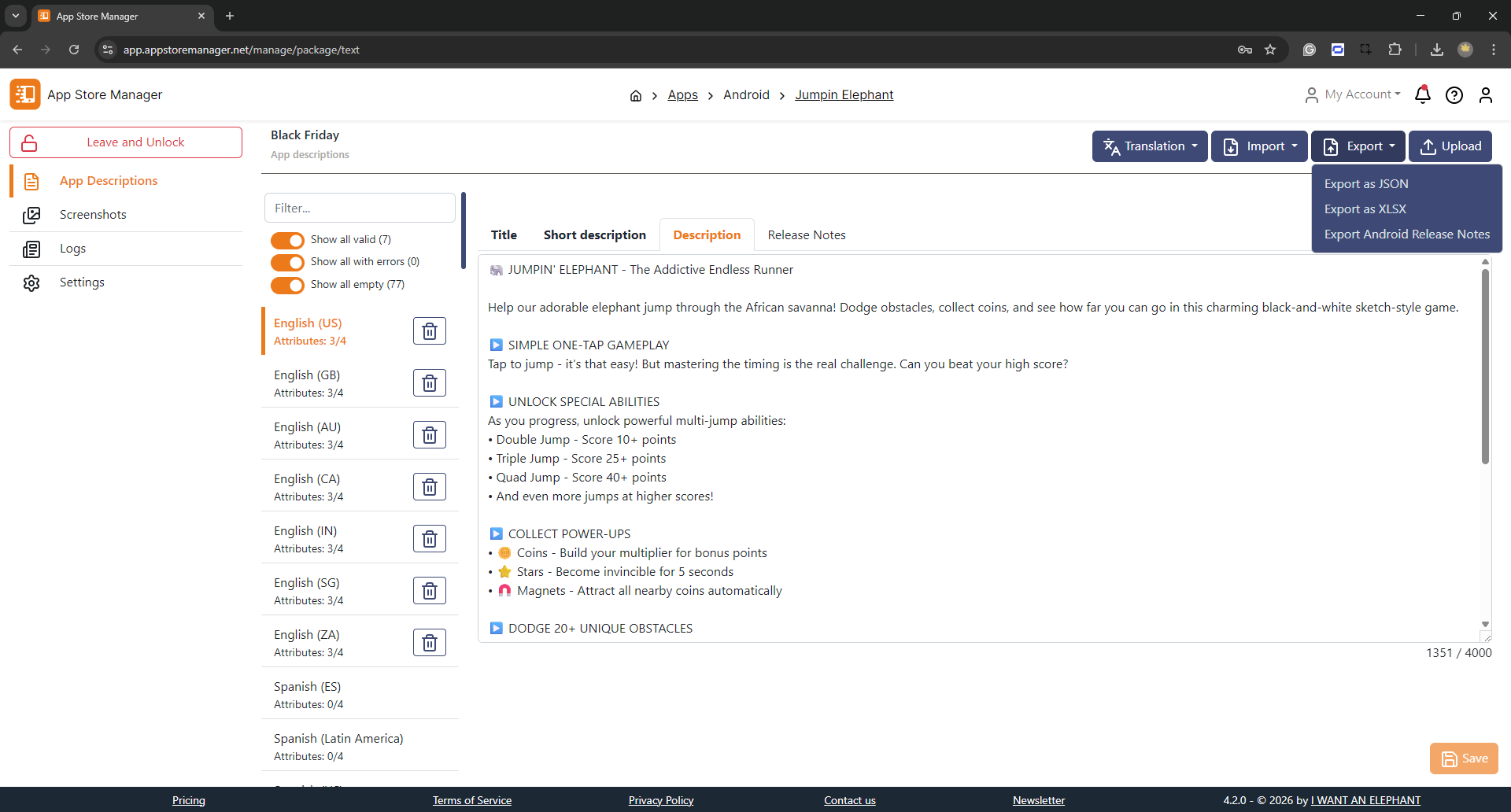
Select the function "Export/ Export as XSLT" and save the metadata in an Excel file locally.

<figure><img src="/files/MK7XXjIfyfcCWUzqKeAV" alt=""><figcaption><p>Export metadate to file</p></figcaption></figure>

The generated file contains all maintained languages and keys (titles, descriptions, and so on).

<figure><img src="/files/OXb1ulIIE7viIItPowtN" alt=""><figcaption><p>App Store metadata Excel export</p></figcaption></figure>

### Phrase setup

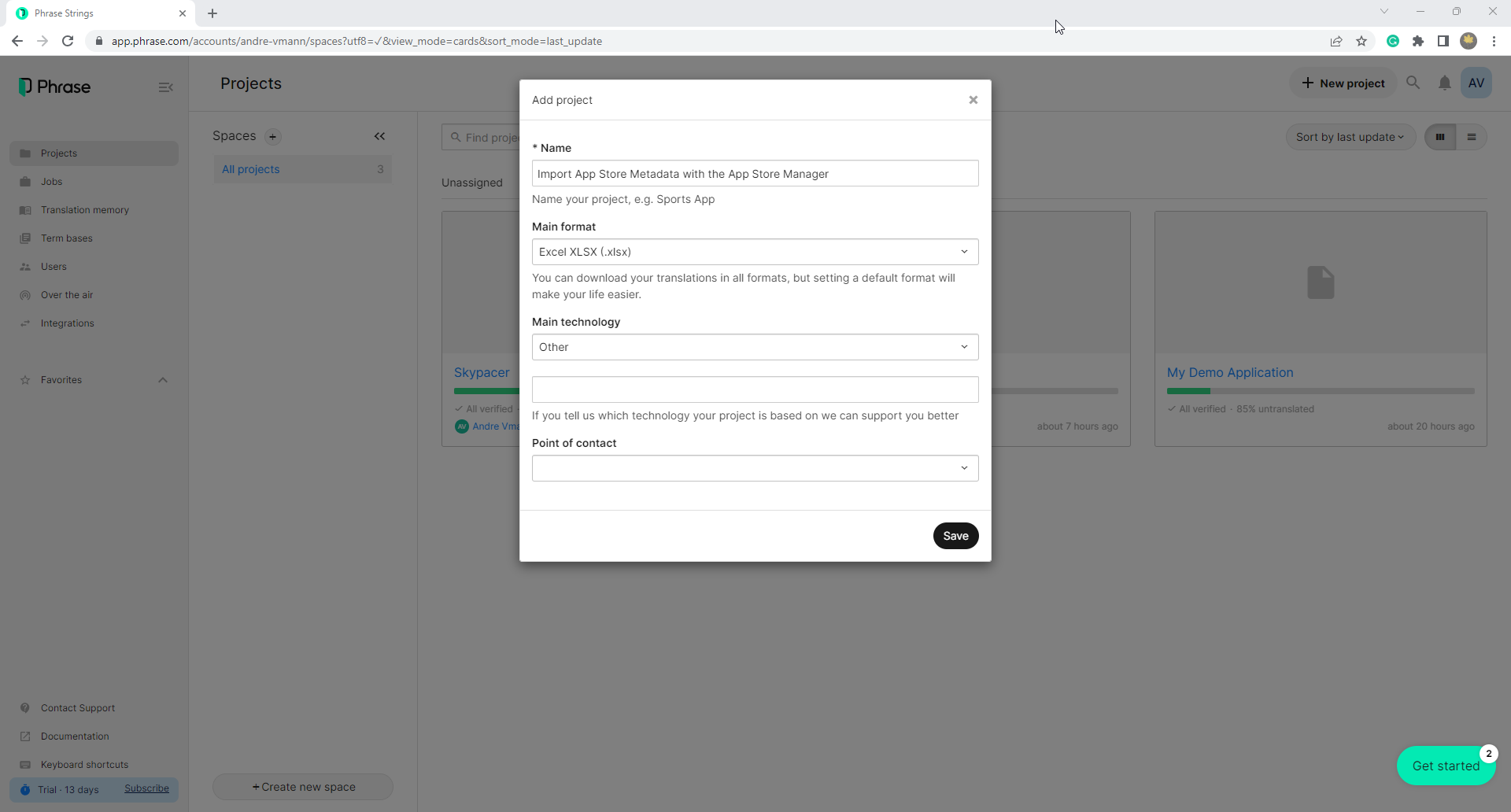
Switch to Phrase now and start a new project there. Choose a name for the project and the primary target language.

<figure><img src="/files/1wYP9gLyKK7T9l3LuTFm" alt=""><figcaption><p>Phrase project setup</p></figcaption></figure>

Add an initial source and target language.

<figure><img src="/files/i6wDCwjDDwh8Ti84dzo8" alt=""><figcaption><p>Language setup</p></figcaption></figure>

Create the project and then switch to the "Upload" tab. And choose "Upload a file" next.

<figure><img src="/files/btqdBnPGJUS1Y8mu7zGw" alt=""><figcaption><p>File upload to Phrase</p></figcaption></figure>

### Import to Phrase

Select the Excel file you created in the App Store Manager and choose "Excel XLSK (.xlsx)" as a format.

Hit "Proceed to Preview".

<figure><img src="/files/F68sDpkHFrZpziWoPdTV" alt=""><figcaption><p>File upload</p></figcaption></figure>

The preview dialog allows you to view and associate additional information.

* First, the first column must be declared as Keynames. To do this, select the corresponding value in the upper select box.
* The other languages must be assigned manually, i.e., this must be done for all columns. Phrase can not recognize this automatically. I.e., selects the appropriate country abbreviation for each column.
* In the last step, the counter for "Content starts in row" is set to "2".

Press "Import" once you are done.

<figure><img src="/files/DEEtGpl97xBeO6cLGpIH" alt=""><figcaption><p>Import setup and preview</p></figcaption></figure>

The imported result is displayed in Phrase and can now be edited further.

<figure><img src="/files/qUREUOvvmatJJNvCz4mH" alt=""><figcaption><p>App Store metadata in Phrase</p></figcaption></figure>

This completes the import into Phrase and the export of the app's metadata from the relevant store.

### Summary

Using App Store Manager, you can easily import app metadata into [Phrase](https://phrase.com/) from App Store Connect and Google Play Console.

The associated texts can be further changed in [Phrase](https://phrase.com/) utilizing collaborative tools.

Once the editing is finished, Phrase export, App Store Manager import, and upload may be used to quickly and efficiently republish the modified translated information in the stores.


---

# Agent Instructions
This documentation is published with GitBook. GitBook is the documentation platform designed so that both humans and AI agents can read, navigate, and reason over technical content effectively. Learn more at gitbook.com.

## Querying This Documentation
If you need additional information that is not directly available in this page, you can query the documentation dynamically by asking a question.

Perform an HTTP GET request on the current page URL with the `ask` query parameter, and the optional `goal` query parameter:

```
GET https://docs.appstoremanager.net/documents/phrase-and-lokalise/import-app-store-metadata-to-phrase.md?ask=<question>&goal=<endgoal>
```

`ask` is the immediate question: it should be specific, self-contained, and written in natural language.
`goal` is optional and describes the broader end goal you are ultimately trying to accomplish on behalf of the user. GitBook uses it to tailor the answer towards what is most useful for that goal.

The response will contain a direct answer to the question and relevant excerpts and sources from the documentation.

Use this mechanism when the answer is not explicitly present in the current page, you need clarification or additional context, or you want to retrieve related documentation sections.